
A brief story about the community of Oku
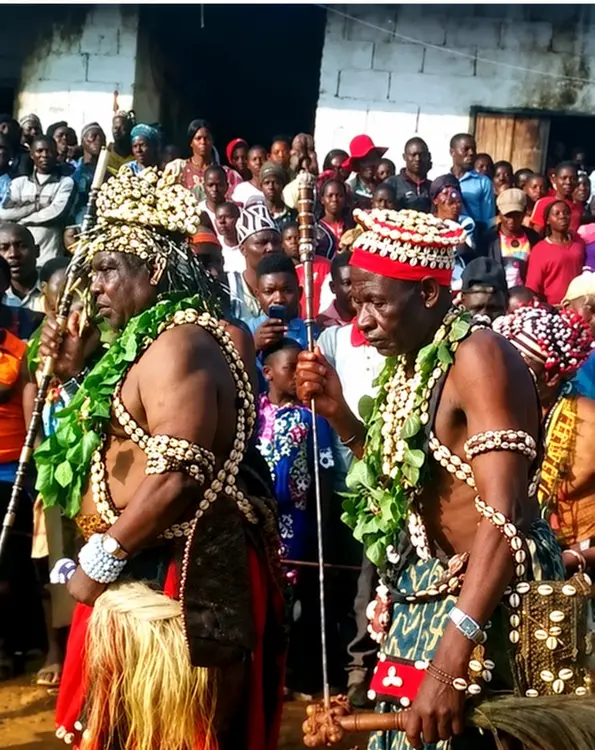
Long ago, more than five hundred years today, Mnkong Mote a Prince from Nso migrated and moved southwestward and settled under the Kilum mountain range. He found some inhabitants (Ntol people) who had been there before. He lived with them and got married to their daughters and soon had a large family. Sometime later, the original inhabitants of the land reduced radically due to an epidemic which weakened them. For Security purpose, Mnkong Mote being a Prince from Nso was then crowned the Fon of Oku. Many other family groups kept coming in to settle until the area was filled with many clans. These clans include: Mbeele, (Mnkong Mote’s Family), Mbulum, Ebdzeng, Kekol, Eydiom, Ebdzee, Eblum and Ebfim.
The name “Oku” comes from the word “Ebkou” a noun formed from the verb “Kou” meaning to pull down mud from a building. Mnkong Mote as a Prince angrily migrated from the Nso Palace when his father died and his younger brother was crowned instead of him. He made his first hut at Simonkoh and when the Nso people helped him in putting mud at the walls, he had no food to offer them, so they angrily pulled down the mud. From then his people back at Nso often referred to his region as “Vikou” (at mud pulling). The Oku people themselves calls it “Ebkou.” At the visit of the Germans in the 1850s, due to pronunciation problems, they called them “Oku” and that is how it came to be in English till today.
VISION OF THE OKU INTER-CHURCH COMMITTEE
The Oku Inter-church Committee exists to transform people in Oku communities with the gospel by teaching, reading, writing, and listening in the Mother tongue.
THE MISSION STATEMENT
The Oku Inter-church Committee in partnership with CABTAL, embark on functional literacy, translating Scripture, reading translated text of Scripture, and Bible study meetings of churches, in church public worships; dramatizing Bible stories in the mother tongue; posting key Bible verses on our media space, presenting Biblical messages during cultural meetings and gatherings; presenting Biblical messages on Community radios; composing songs and singing in public worship services, church meetings, and funeral services.
VALUES OF THE OKU INTER-CHURCH COMMITTEE
The core values of the inter-church committee are:
Love, peace, integrity, respect of human dignity, freedom of expression, transparency, accountability, humility, service and language development.
